

From The Adkernel Team
Case Study: Programmatic KPI Automation - How Adkernel's Clients utilize KPI Bid Optimization in the DSP Suite
In the world of programmatic media buying, effectively optimizing for campaign KPIs can be both challenging and time-consuming.
Advertisers and agencies that attempt to create ROI-positive programmatic campaigns based on KPIs related to sales, app installs, or other outcomes face difficult delivery scenarios. This often results in reducing programmatic sources in the media mix for performance campaigns.
About Adkernel: Adkernel is a leading provider of transparent ad technology. Clients are using Adkernel's white-label DSP (DSP Suite), RTB Exchange (RTB Suite), and PPC ad-server (PPC Suite) to process over 200 billion ad requests daily.
In this case study, we feature a large O&O (Owned and Operated) publisher network using the KPI automation features included in Adkernel's DSP Suite to automate and improve performance for their advertisers and their bottom line.
TL;DR
They increased budget allocations from advertisers and reduced manual intervention in campaign optimization, freeing their team to onboard more direct advertisers.
Case Study: Large Direct Publisher Network
Background
The client is a large direct publisher network that relies heavily on maintaining campaign performance for direct advertisers, mainly performance marketing agencies and self-serve clients with CPA goals.
Before launching their Adkernel-based platform, the client had major challenges growing self-serve advertiser spend due to weak CPA performance and high ad-operations workload per advertiser.
After implementing Adkernel's DSP Suite and connecting it to their owned-and-operated properties, the client started offering selected advertisers access to KPI automation features in the campaign manager.
They later shared that clients were highly satisfied with performance. They also used network-level optimizers to increase profitability while still meeting advertiser KPIs.
KPI Bid Optimizations for Campaigns
Advertisers can target CPA and CPC goals using built-in campaign controls. The optimizers begin with a learning period of about 24 hours, where bid levels and adjustments are tested by traffic dimensions. After this phase, performance is automated and bids are adjusted according to KPI targets. Sources without conversions receive reduced bids, and budget shifts to more performant sources while still exploring newly added ones.
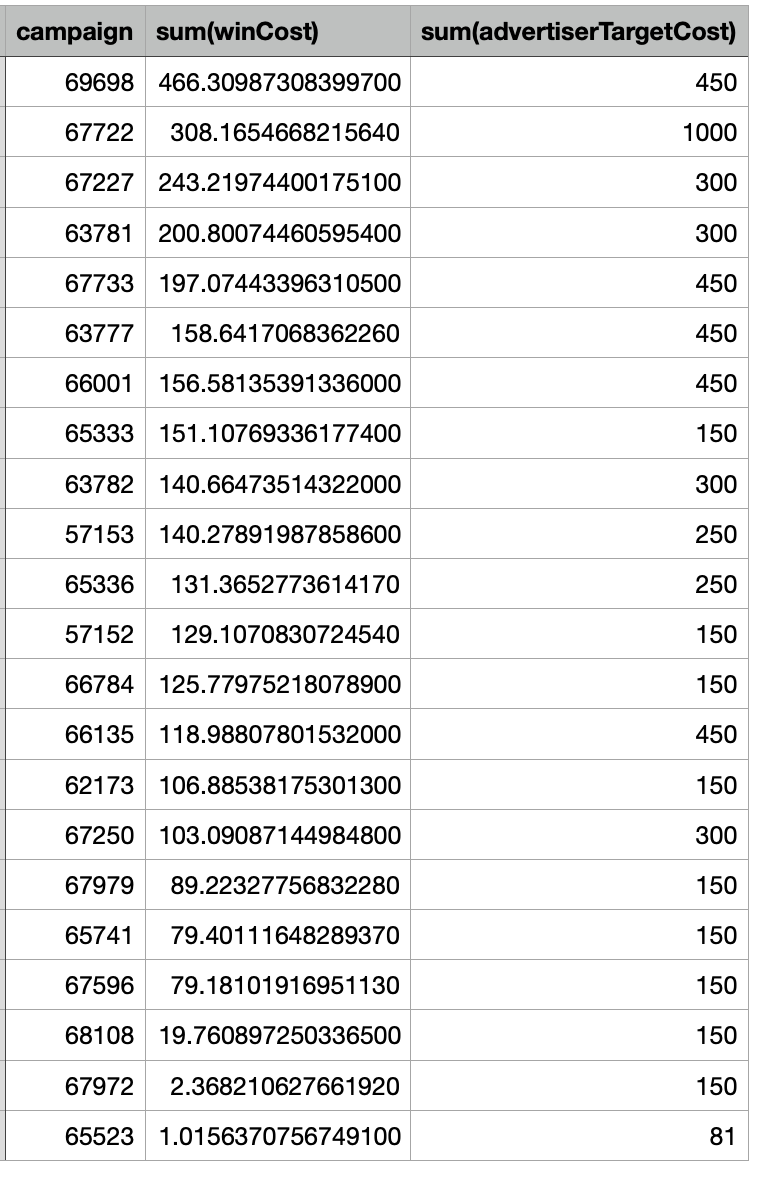
Here we see aggregate results for recent campaigns: total traffic cost (Win Cost) against total campaign target CPA costs. In some cases, traffic cost is significantly lower than target CPA totals, creating margin that can be further optimized at the network level.
Walkthrough: Main Features of KPI Optimization in DSP Suite
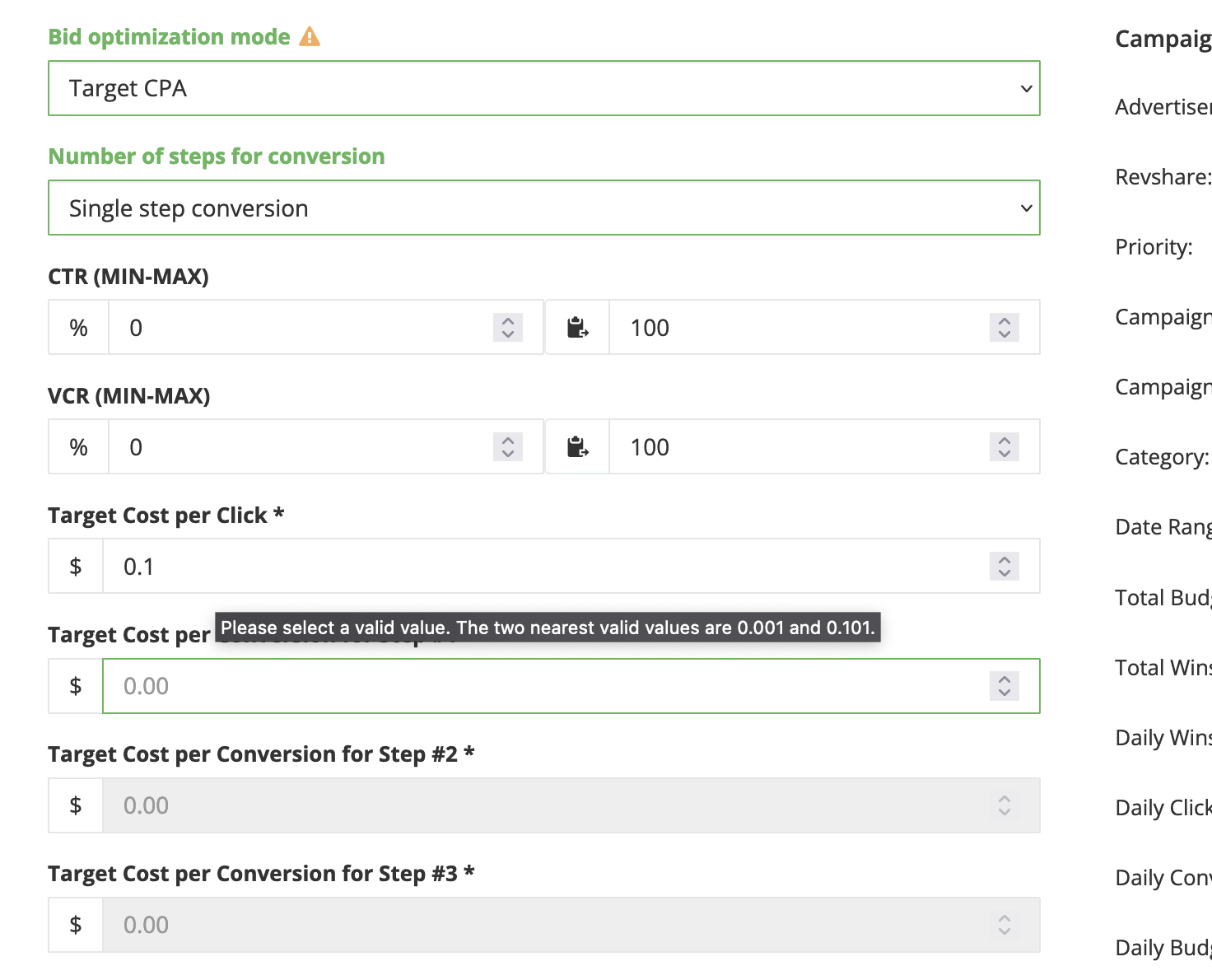
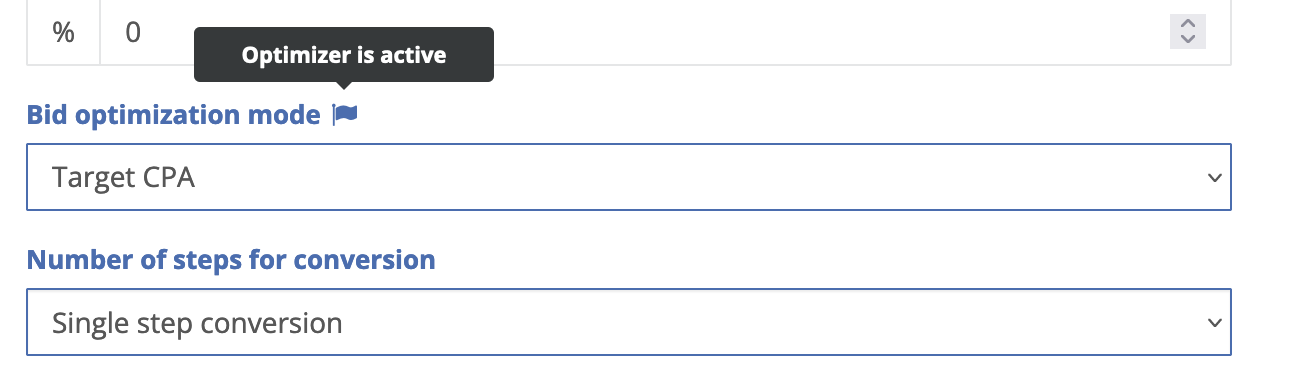
- Bid Optimization Modes The DSP Suite provides multiple optimization modes, including CPA (cost per action), CPC (cost per click), and CPCV (cost per completed view). These help advertisers align bidding with campaign goals and target KPIs.
Default bids: The default bid is the initial bid per sub ID. If the optimizer runs in full-auto mode without "Min source clicks/spend for optimization", changing the default bid does not affect optimized bids.
If "Min source clicks/spend for optimization" is enabled, bids for sources below that threshold do change with the default bid.
Conclusion
Adkernel's DSP Suite helps automate campaign performance with KPI optimization modes, improves operational efficiency, and supports better profitability while preserving advertiser KPI outcomes.
If you would like to learn more about Adkernel or schedule a demo, contact sales@adkernel.com.